



A History of the Toilet
Posted by Restroom Stalls and All on Jun 30th 2017
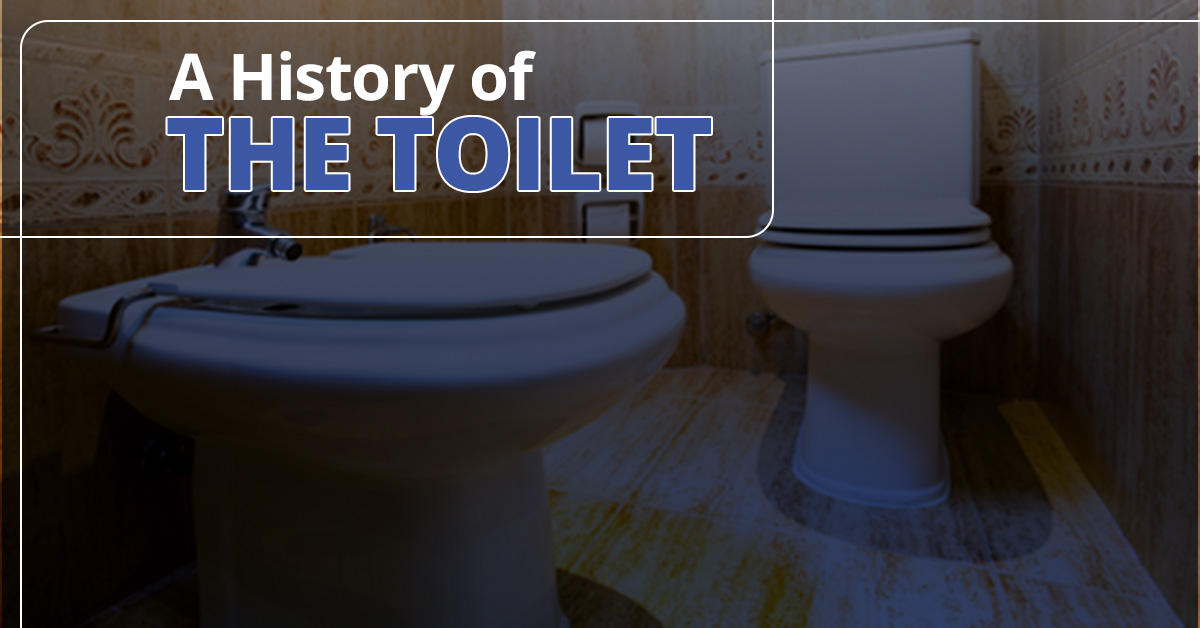
Here at Restroom Stalls and All, we know how important, yet easy to overlook, your company bathrooms are. We do sell toilet partitions and toilet accessories. They are one of the bigger impressions you will make on a customer, right up on par with your service. Rightly so, they take care of an essential biological function. Have you ever thought about how much work must have gone into that toilet? It seems like a simple enough concept, but someone must have invented it. Here, we review a little bit of the history of the modern toilet.
Ancient World Toilets
Many ancient cultures had rudimentary sewage systems and toilets. The people of Skara Brae in the Orkney Islands during the Stone Age, for example, were known to have small stone huts with drains built under them, some of which had cubicles over the drains. This is thought to have been an instance of inside plumbing.
In ancient Egypt, the upper-class citizens enjoyed limestone toilets, while people experiencing poverty used a wooden stool with a hole in it. Underneath these primitive toilets were sand-filled boxes, which had to be removed by hand, much like a cat litter box today.
In the ancient Indus Valley civilization (about 2,600 BC- 1,900 BC), sewer systems were dug beneath the streets, which were built on an organized grid pattern. These sewage systems were so advanced that their toilets had flushing water.
A few hundred years later, on the island of Crete, a civilization called the Minoans also built sewer drainage systems and had toilets with flushing water.
The Romans took things a step further, with their own goddess of sewers, Cloacina. Wealthy Romans had toilets in their personal quarters, but even public lavatories were available in Rome, although they were essentially stone benches with no partitions. In these lavatories, citizens wiped themselves with a sponge attached to a stick.
Middle Age Toilets
Toilets in the Middle Ages were typically outhouses: just a hole in the ground with wooden seats placed over it. However, some medieval monks built their lavatories out of stone or wood over rivers. One notable example was in Portchester Castle around the 12th century, where monks built a lavatory with a chute leading toward the sea. When the tide rose and fell, it would take the sewage with it.
Medieval castles had their version of a toilet, called a garderobe. Essentially, it was just a large vertical shaft under a stone seat. Some of these garderobes would empty their chutes into the castle moat. Affluent people of the time would have used rags to wipe after using the garderobe. However, regular people just used a plant known as common mullein, or woolly mullein.
Modern Toilets
Sir John Harrington invented the flushing lavatory with a cistern in 1596, but unfortunately, his idea failed to catch on at the time. Instead, people continued to use chamber pots and cesspits.
While the flushing toilet was originally a luxury, and didn't become widespread for everyone until late into the 19th century, a patent for a flushing bathroom was given to Alexander Cumming in 1775.
An earth closet was a popular alternative to the modern toilet during the 19th century. Earth closets are just boxes of granulated clay placed over a pan. When you pulled a lever, it would drop the clay over the pan. Flushing bathrooms didn't replace earth closets until early in the 20th century.
While we Americans take toilets for granted, many countries around the world still lack hygienic toilets. In 2001, the World Toilet Organization was formed to increase the availability of toilets in the developing world.
Here at Restroom Stalls and All, we sell high-quality toilet partitions and toilet accessories across the country. If you are interested in stocking your personal or company restroom, you should look at our product selection. Please call us if you have any questions about our products. One of our friendly and knowledgeable representatives will happily answer any questions. A History of the Toilet - Restroom Stalls and All LLC.